Why do dogs love sniffing so much on walks?
Why smells are essential to how dogs discover the world.
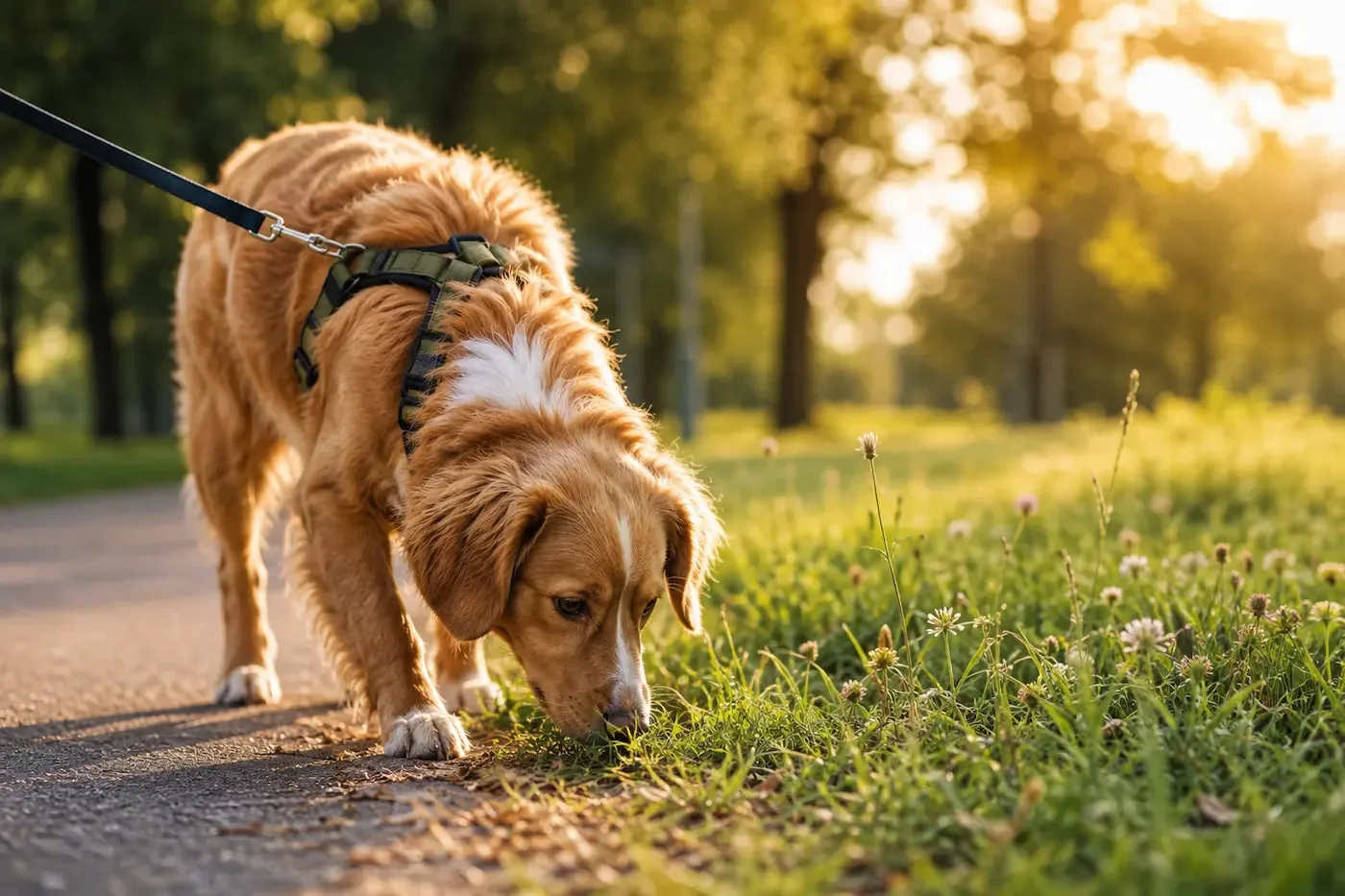
🐾 You're walking along calmly… then your dog stops again.
A tree.
A patch of grass.
A storm drain.
The same post as yesterday. 😅
Meanwhile, you're waiting, leash in hand, wondering:
“What could it possibly find so interesting?”
And yet…
For a dog, sniffing on a walk is far from a waste of time.
It's actually an extremely important activity for its mental and emotional balance.
Because a dog doesn't discover the world mainly with its eyes.
It discovers it with its nose.
And a simple walk can become:
- a huge source of information,
- a very stimulating mental activity,
- a moment of exploration,
- and a natural way to understand its surroundings.
Your dog “sees” the world with its nose
Humans mostly use sight to understand their environment.
Dogs work completely differently.
Their sense of smell is so developed that they build much of their perception of the world through scents.
For us, a walk mostly looks like:
- a street,
- a park,
- a few trees,
- cars,
- or a sidewalk.
For a dog?
It's a vast landscape of invisible information.
A smell can reveal:
- that another animal passed by,
- a recent presence,
- an emotion,
- a change in the environment,
- or activity that happened several hours earlier.
Its nose has an impressive ability to analyze.
That's also why a walk full of smells can sometimes be much more interesting to it than a long, brisk walk with no chance to explore.
Smells tell a story
When your dog stops at a specific spot, it's not smelling “just a smell”.
It's literally analyzing information.
Thanks to its sense of smell, a dog can sometimes pick up clues about:
- another dog having passed by,
- its sex,
- its emotional state,
- its territory,
- or how long ago it was there.
Yes…
just by sniffing a patch of grass. 😅
That's why so many dogs come back to sniff exactly the same spots on their walks.
These areas become a bit like communication points between dogs.
Sniff walks are growing in popularity
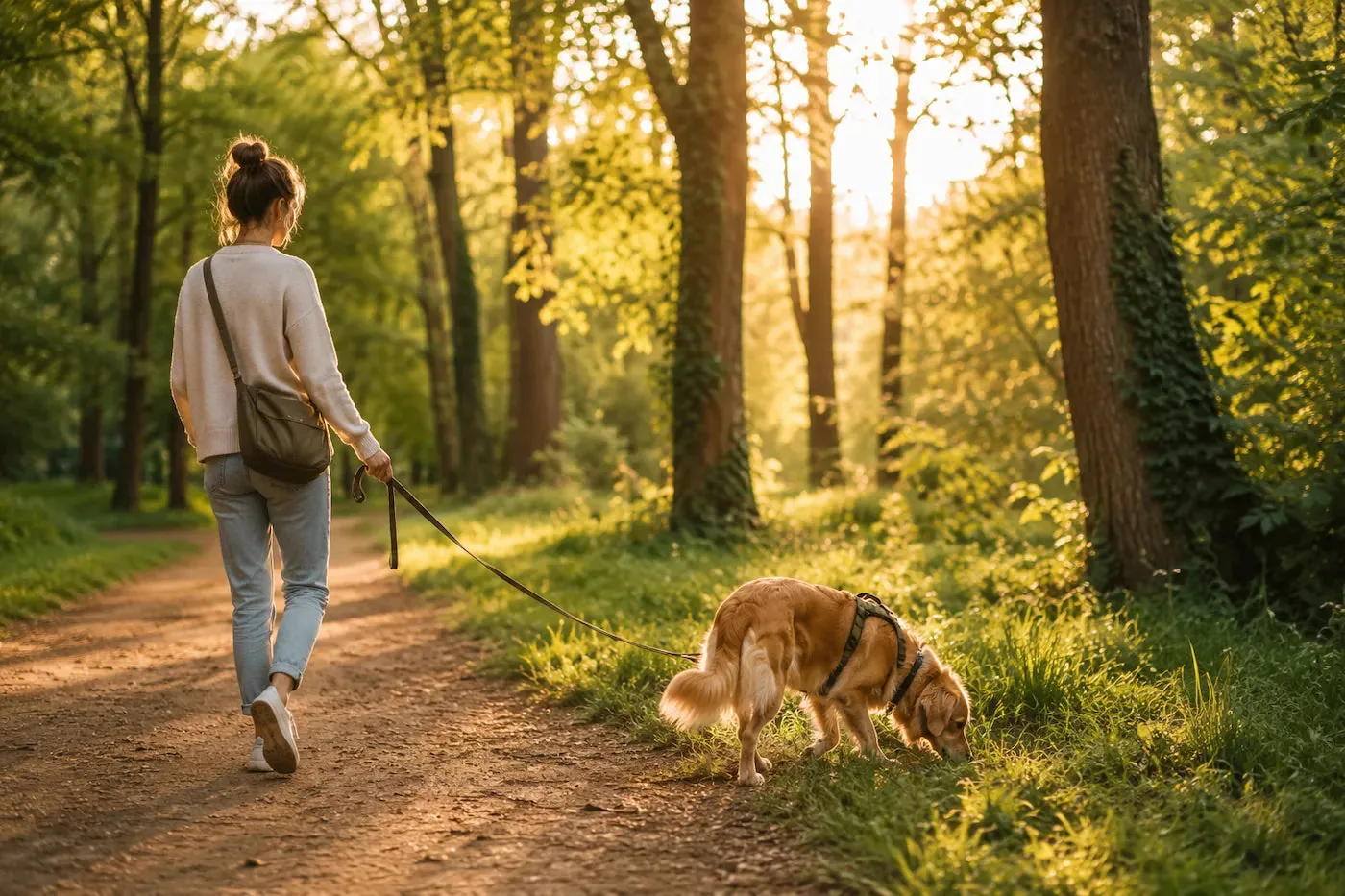
In recent years, walks focused on scent exploration have been getting more and more attention in the dog world.
The principle is simple:
give the dog more freedom to explore certain smells at its own pace.
Instead of only trying to:
- walk fast,
- cover a long distance,
- or “burn off energy” quickly,
the goal is also to let it:
- explore,
- observe,
- analyze its environment,
- and use its brain naturally.
💡 A long leash or a comfortable walking harness can make this kind of outing more pleasant for both dog and owner.
Many specialists even consider these walks an excellent way to encourage calm and relaxation.
Sniffing takes a lot of mental energy
We often think a tired dog is simply a dog that has run a lot.
But mental fatigue plays a huge role too.
Sniffing, analyzing and interpreting smells takes a lot of concentration.
The brain is constantly working during this exploration.
That's why a calm walk where a dog can take time to sniff different spots can sometimes be more satisfying than a long, brisk walk without breaks.
After a walk rich in smells, dogs seem:
- more relaxed,
- calmer,
- and mentally satisfied.
This mental exploration can be very enriching for them.
At home, activities like a lick mat or a food-dispensing toy can also extend this stimulation.
Why do some smells become so fascinating?
You've probably experienced this before:
Your dog suddenly refuses to move because a smell seems to CAPTURE its full attention.
Different things can explain this:
- another animal having recently passed by,
- food,
- an unusual new smell,
- a busy area,
- or a change in the environment.
Dogs can also be naturally drawn to smells completely different from the ones that interest us.
And honestly…
their choices sometimes remain a great mystery to us.
Walks aren't experienced the same way by us… and by them
Very often, humans see the walk as:
- physical activity,
- a brisk walk,
- or a way to “burn off energy”.
The dog experiences it in a completely different way.
For it, the walk is also:
- a moment of exploration,
- a way to understand its environment,
- and an important mental activity.
Constantly preventing a dog from sniffing on a walk can sometimes be like visiting a museum… without being allowed to look at the art.
Some breeds use their nose a lot
Although all dogs use their sense of smell every day, some breeds are especially known for their scenting abilities.
These include the:
- Beagle,
- Bloodhound,
- Basset Hound,
- Labrador,
- and German Shepherd.
These dogs tend to explore their environment more with their nose during walks.
Their sense of smell naturally draws them to simple search activities.
Snuffle mats and small treat search games are very popular with dogs that love using their nose.
Should you always let your dog sniff everywhere?
Of course, some situations call for limits for safety reasons or out of respect for the surroundings.
But in a suitable, safe environment, letting a dog take its time to sniff can be extremely beneficial.
It can:
- make walks more satisfying,
- reduce frustration,
- encourage natural exploration,
- and provide a very enriching mental activity.
Sometimes, slowing down the pace a little completely transforms the experience.
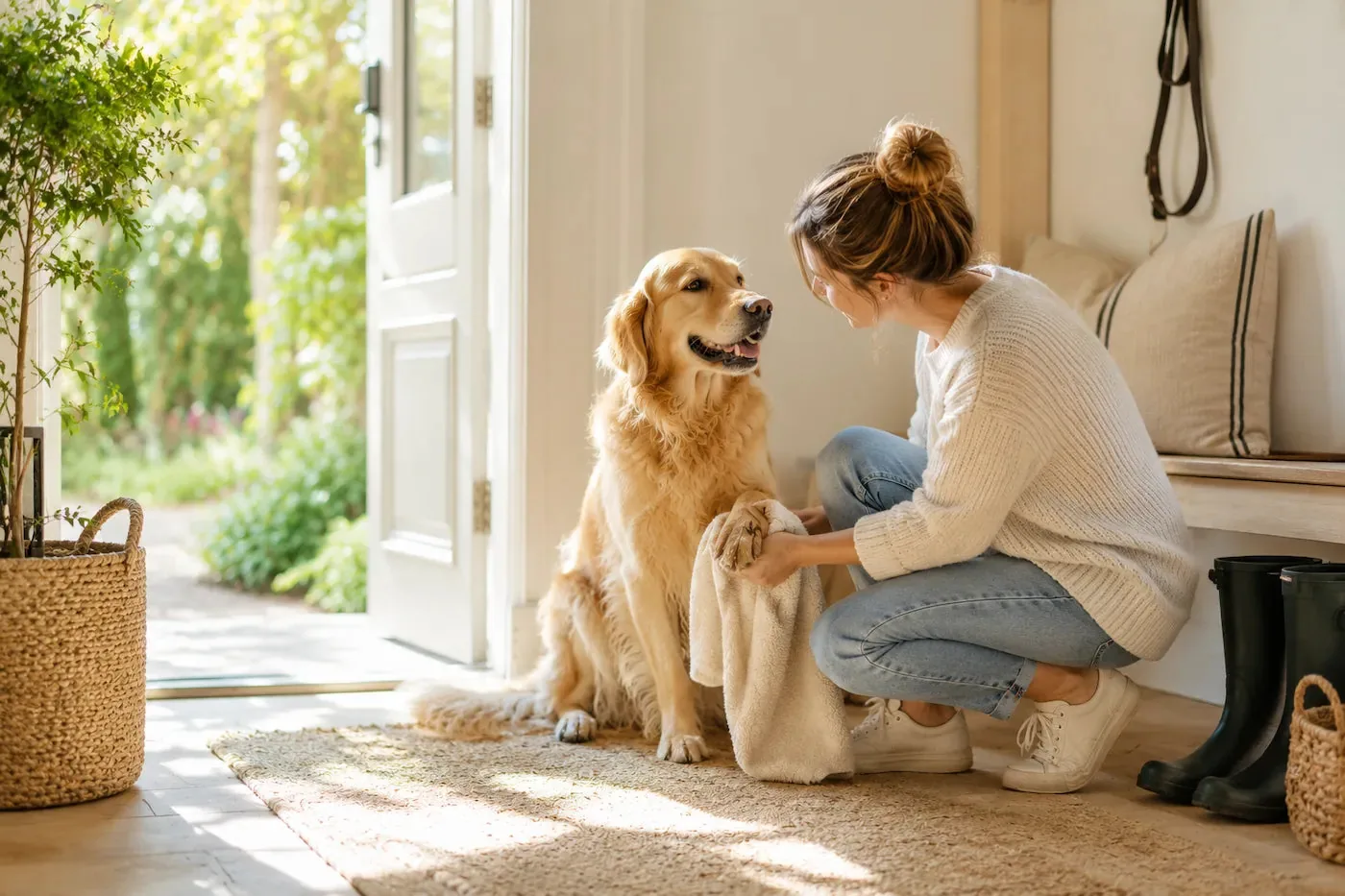
After walks, many owners keep an absorbent paw towel or a washable mat by the door to make coming home less messy.
A few accessories that make walks more enjoyable
Over time, owners end up adopting small accessories that make outings simpler and more pleasant.
For example:
- a long leash to give more freedom during walks,
- a portable dog water bottle on hot days,
- a walking light for early-morning or evening outings,
- or an easy-to-reach treat pouch.
Small details… that can really improve the experience every day.
Myth or reality?
Myth:
“My dog wastes time sniffing everywhere.”
Reality:
For it, this activity is a natural way to discover, understand and analyze its environment.
In conclusion
For a dog, sniffing on a walk isn't a minor detail.
It's an activity deeply tied to how it discovers the world.
Behind every stop that lasts a little too long, there's often:
- curiosity,
- analysis,
- exploration,
- and a huge amount of information invisible to us.
So the next time your dog wants to sniff “yet another patch of grass”… 😅
you might see that moment a little differently.
Read next
- 7 signs your dog needs more stimulation
- Understanding dog behaviour
- The small accessories that really make life easier with a dog
According to canine behaviour specialists at the American Kennel Club (AKC) and VCA Animal Hospitals, letting dogs explore their environment with their sense of smell contributes to their mental stimulation, their well-being and a more enriching walk.