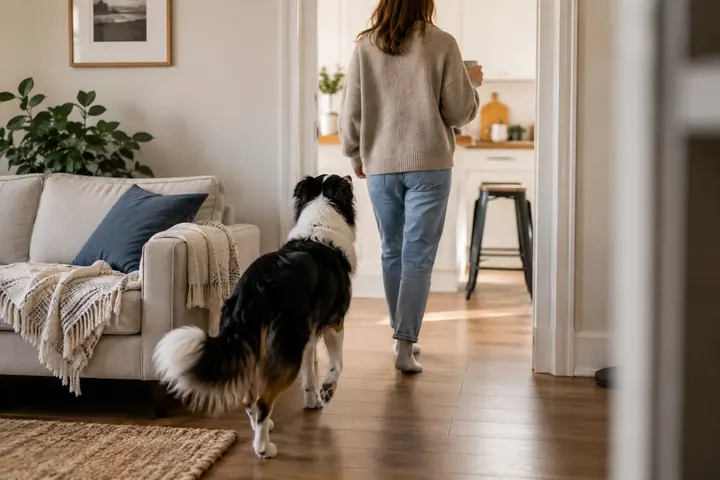
7 signs your dog needs more stimulation
Destruction, restlessness, constant demands: the signs and ideas to enrich its life.
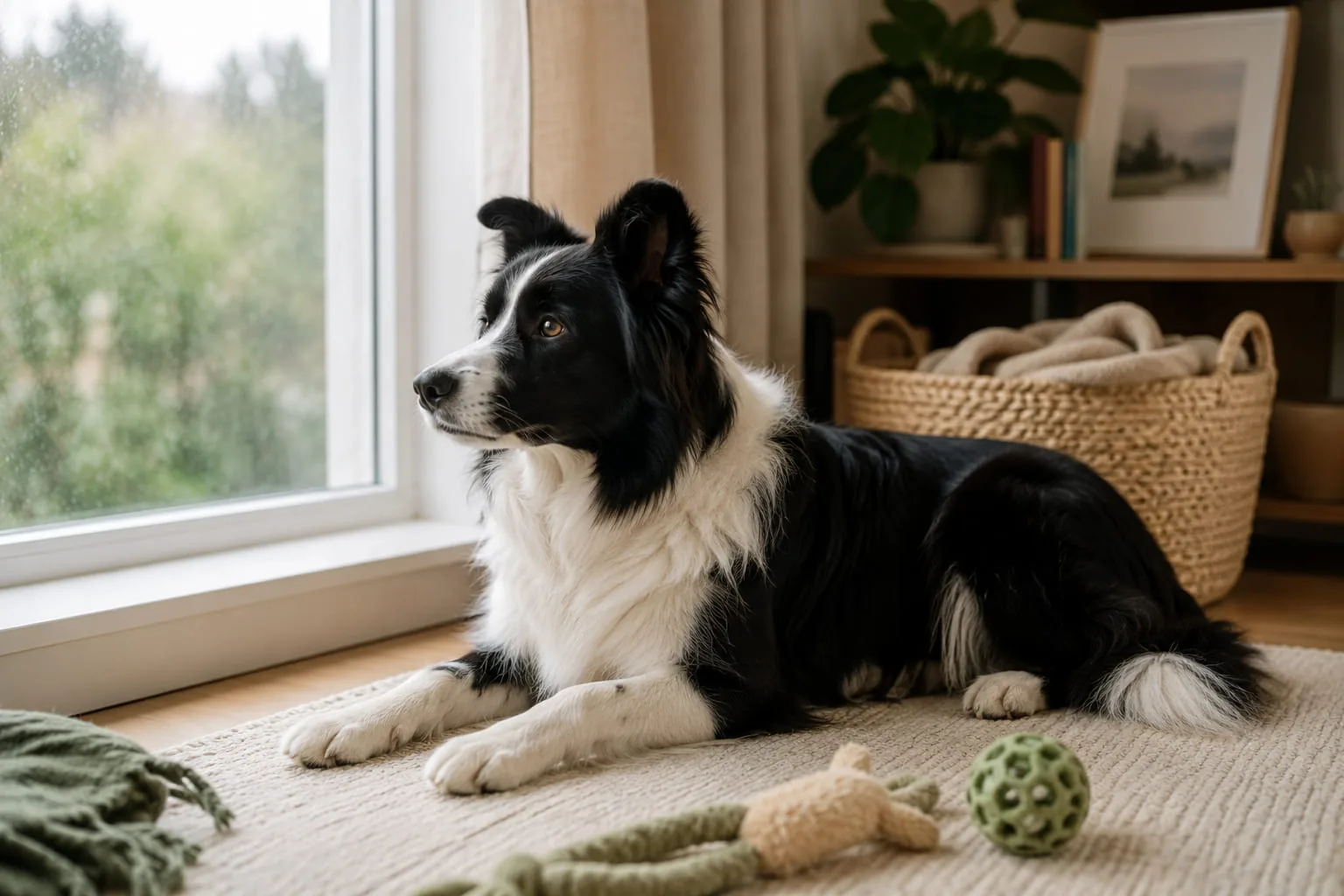
🐾 A dog that lacks stimulation doesn't necessarily become “difficult”.
But it may try to channel its energy, cope with boredom… or get your attention.
Behaviours like nibbling, following you everywhere, constantly demanding or getting restless are sometimes linked to not enough mental stimulation.
Good news: a few changes can already help your dog feel better.
In this article, you'll discover the most common signs of under-stimulation in dogs, along with practical ideas to enrich its environment without complicating your routine.
Why is stimulation important for dogs?
We often think of walks as the way to let it burn off energy.
But mental stimulation is just as important.
Sniffing, exploring, searching, chewing or solving small challenges helps a dog:
- channel its energy
- reduce frustration
- avoid boredom
- manage its emotions better
- feel calmer at home
Even a calm or senior dog may need more variety in its activities.
And this need varies with:
- age
- breed
- temperament
- energy level
- environment
💡 A mentally stimulated dog doesn't need to be kept busy all the time.
The goal is rather to let it explore, think and make more use of its natural instincts.
1. It destroys things in the house
Shoes, cushions, blankets, furniture corners…
A dog that destroys things isn't necessarily trying to “misbehave”.
Very often, it's actually trying to:
- release energy
- keep itself busy
- chew to calm down
- fight boredom
This often happens:
- after long periods alone
- on rainy days
- when every day looks the same
💡 Offering more mental activity can help reduce this behaviour.
Popular options:
- a lick mat
- a KONG-type toy
- a puzzle toy
- food search activities
2. It constantly demands your attention
Does your dog follow you everywhere?
Does it keep bringing you toys?
Does it constantly ask to play or go out?
This behaviour can sometimes indicate a lack of stimulating activities.
Even with lots of affection, a dog can get bored if its mental needs aren't sufficiently met.
Dogs also need to:
- think
- use their nose
- explore their environment
- solve small challenges
A few well-chosen enrichment activities can sometimes be more beneficial than a long, repetitive play session.
💡 For example, you can:
- hide a few treats in a room
- scatter kibble in the grass
- use a rolled-up towel with treats to find
- vary your walking routes
3. It becomes restless or hyperactive in the evening
Do you notice an intense burst of energy in the evening?
A dog can get plenty of physical activity… but very little mental exercise.
The result:
- restlessness
- overexcitement
- difficulty calming down
- impulsive behaviours
Calmer activities can help your dog release this built-up tension:
- chewing
- licking
- food searching
- interactive games
💡 Many dogs seem more relaxed after:
- a frozen lick mat
- a search game
- a treat-dispensing toy
- a chewing session with a KONG-type toy
4. It licks, nibbles or scratches excessively
When a dog is bored or lacks activity, it can develop repetitive behaviours.
For example:
- licking its paws often
- nibbling objects
- scratching frequently
- pacing in circles
- staring out the window for long periods
⚠️ Health problems can also explain these behaviours.
If it becomes frequent, sudden or intense, it's still important to talk to your veterinarian.
But in many cases, more enrichment and activities can also help ease this tension.
5. It eats too fast
Mealtime is often one of the most stimulating moments of a dog's day.
When food is gulped down in seconds, it quickly loses this chance to:
- think
- use its nose
- explore
- naturally slow down
💡 Making meals more interactive can be a great way to add stimulation without complicating your routine.
Here are a few easy ideas:
- use a slow feeder bowl
- spread food on a lick mat
- hide a few kibbles
- use a treat-dispensing toy
- switch up where meals are served
6. It seems quickly bored
Does your dog lose interest in its toys quickly?
That's sometimes a sign it's missing:
- novelty
- challenges
- variety
You don't need to keep buying new accessories.
Rotating toys can already help a lot.
You can also:
- hide treats around the house
- vary your walks
- add sniffing sessions
- offer different textures to chew
- change activities depending on the weather
Adding a little variety often makes the environment much more interesting for your dog.
7. It sleeps little… but never seems satisfied
A dog that lacks stimulation may sometimes:
- sleep out of boredom
- or, on the contrary, have trouble relaxing
We sometimes think a “tired” dog is automatically fulfilled.
But many dogs mostly need activities better suited to their mental needs.
A dog with balanced stimulation often seems:
- calmer
- more relaxed
- more settled at home
How can you stimulate your dog without complicating your life?
No need to turn your home into an agility course to enrich your dog's life.
A few adjustments to its routine can significantly enrich its environment:
- allow more time to sniff on walks
- vary your routes
- offer search games
- build in chewing time
- use interactive meals
- rotate toys
- create small food challenges
Even 10 to 15 minutes of mental activity can sometimes be very satisfying for a dog.
The goal isn't to keep your dog busy nonstop.
It's rather to better meet its natural needs.
Want to add more variety to your dog's meals?
Download for free our recipes and enriching meal ideas (in French) to add more stimulation and variety to your dog's meals.
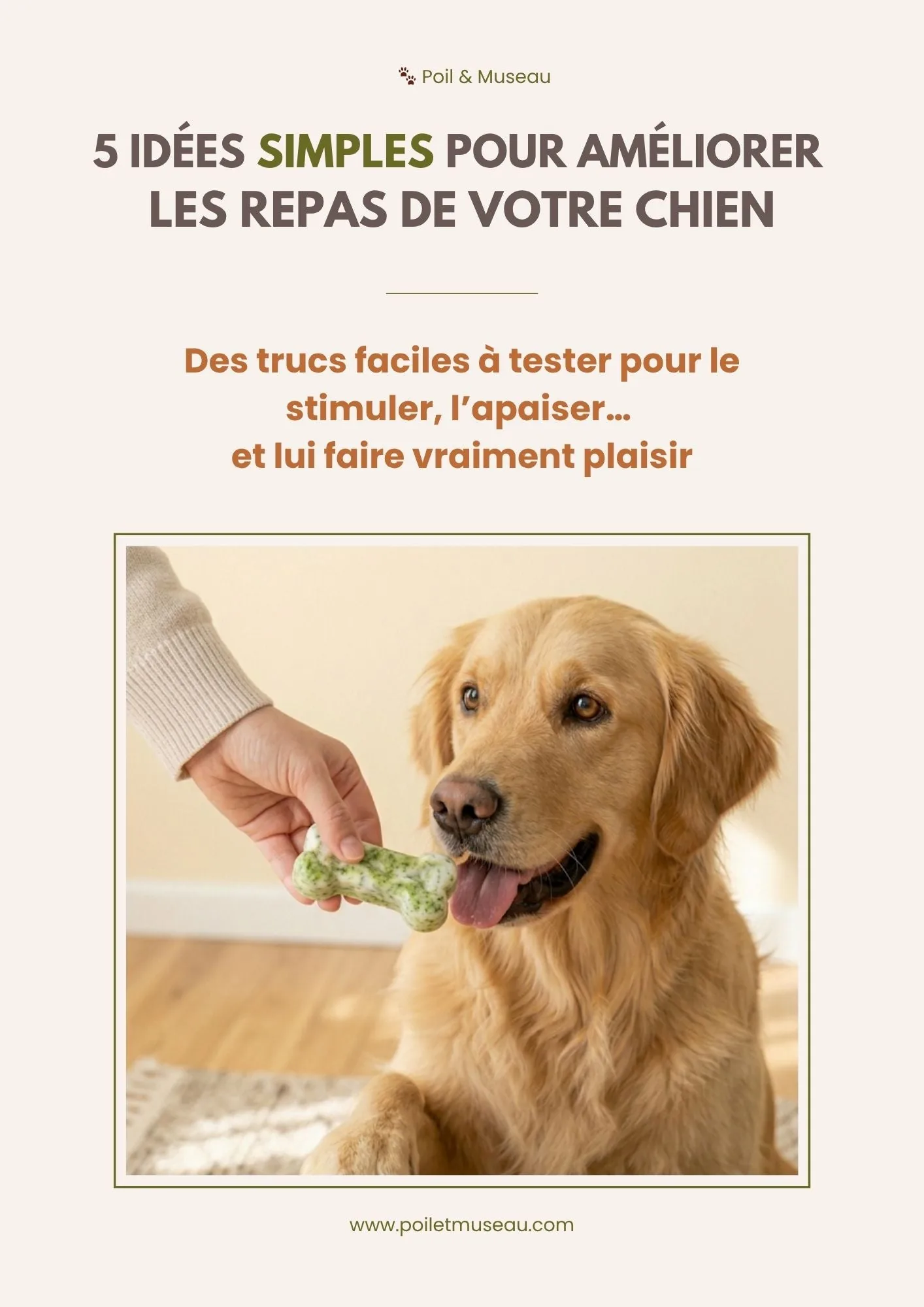
Inside, you'll find:
- fresh, easy-to-prepare recipes
- ideas to enrich meals
- tips to vary food-based activities
- ideas that work with lick mats and enrichment toys
Useful products to enrich meals and activities
Here are a few accessories often used to help stimulate dogs naturally:
- lick mat
→ helps slow down, occupy and calm - KONG-type toy
→ ideal for enrichment and chewing - slow feeder bowl
→ helps slow down meals - interactive puzzle toy
→ stimulates the dog mentally - treat dispenser
→ encourages thinking and movement
🐾 Read next
7 simple ways to make your dog's meals more stimulating
Signs your dog isn't feeling well
Conclusion
A dog that lacks stimulation isn't trying to be “difficult”.
Very often, it's simply looking for a way to express an important need.
With activities better suited to its needs, your dog can gradually:
- channel its energy better
- feel calmer
- be less bored
- regain a better balance
Very often, the easiest habits to adopt bring the best results.
According to canine behaviour specialists at the American Kennel Club (AKC) and VCA Animal Hospitals, behaviours like destruction, excessive barking or restlessness can sometimes be associated with a lack of physical or mental stimulation in dogs.