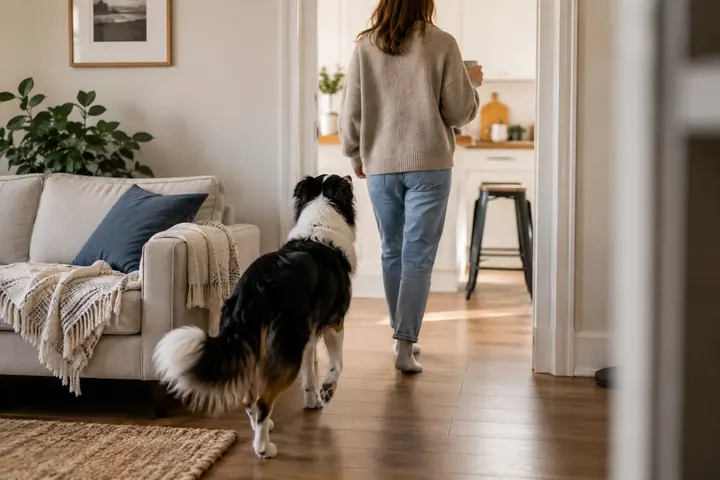
Understanding and correcting dog behaviour
Destroying, barking, pulling on the leash? The causes and simple solutions.

🐾 Contrary to popular belief, a dog never does something “for no reason”.
If it adopts a bothersome behaviour, it's often a way of expressing a need, stress or discomfort.
💡 Destruction, barking, biting or restlessness…
These behaviours are common, and they can quickly become a problem day to day.
In this article, you'll learn:
- Why your dog acts this way
- What to do in practice
- How to correct these behaviours effectively

The most common dog behaviours are linked to very specific needs
Here are the most common behaviours… and above all, how to respond effectively.
It destroys things
Shoes, cushions, furniture… nothing is safe.
It's one of the most common dog behaviours.
💡 This behaviour isn't “problematic” in itself… it's often a response to an unmet need.
Why?
- Boredom
- Separation anxiety
- Lack of exercise
💡 What to do right away
- Increase outings and stimulation
- Offer enrichment toys
- Limit long periods of inactivity
- Create a stable routine
A dog that's stimulated mentally and physically destroys much less.
Destructive behaviours are often linked to a lack of activity. Offering suitable activities helps redirect its energy in a more constructive way.
For example, a Kong-type toy can help channel this need, as can treat-dispensing toys that make the activity last longer.
It barks excessively
A barking dog is always trying to communicate.
💡 Barking is rarely a problem in itself… it's often a form of communication.
Why?
- Boredom
- Need for attention
- Stress or alertness
- Reaction to the environment
💡 What to do right away
- Identify the cause of the barking
- Avoid reinforcing the behaviour (attention, yelling)
- Encourage calm
- Give your dog more stimulation
A balanced, reassured dog barks much less.
It bites or nips
This behaviour is common, especially in puppies.
Why?
- Poorly channelled play
- Excitement
- Stress or fear
- Lack of structure
💡 What to do right away
- Avoid playing with your hands
- Redirect to suitable toys
- Calmly stop the game if needed
- Respect the dog's signals
A well-guided dog quickly learns to control its bite.
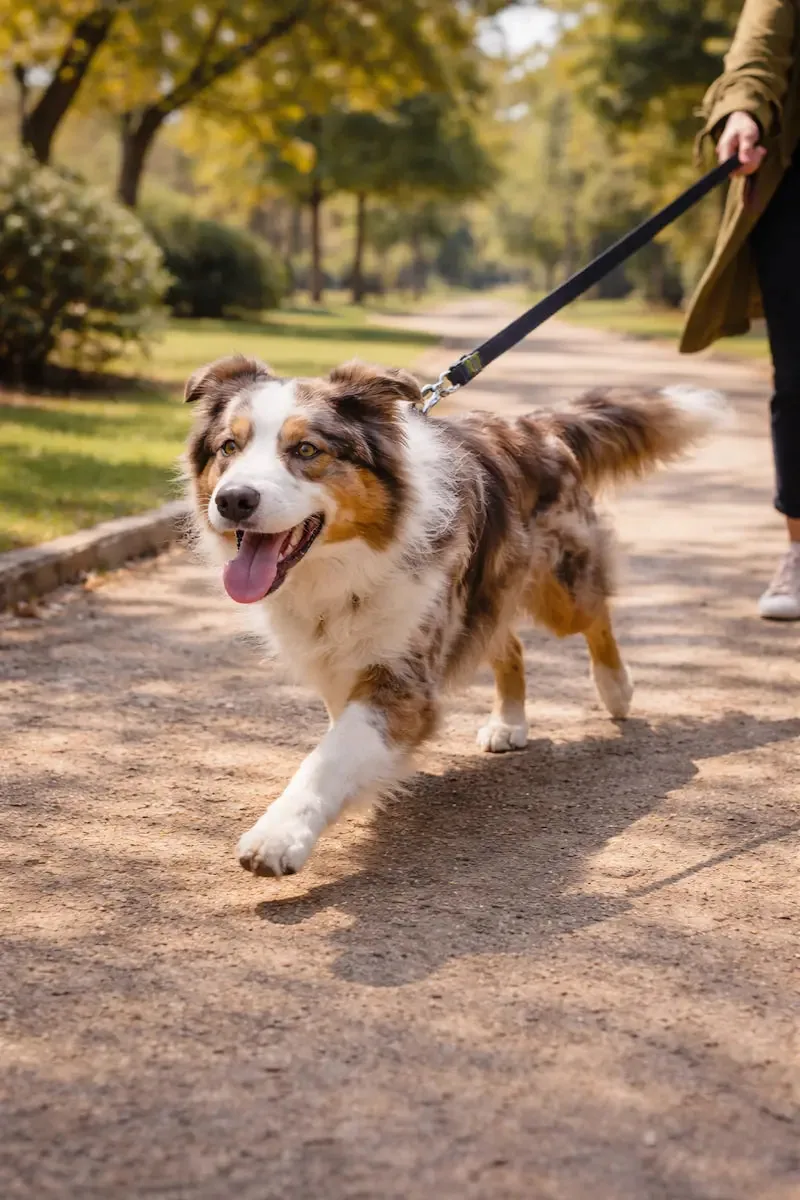
It pulls on the leash
Walks become difficult and unpleasant.
Why?
- Excitement
- Lack of training
- An overstimulating environment
💡 What to do right away
- Slow down the pace
- Reward calm walking
- Use suitable equipment
- Be consistent with outings
Consistency is essential to correct this behaviour.
It jumps on people
Often seen as enthusiasm… but it can become bothersome.
Why?
- Excitement
- Attention-seeking
- A reinforced habit
💡 What to do right away
- Ignore the behaviour
- Reward it when it stays calm
- Teach an alternative (e.g. sit)
An ignored behaviour fades; a rewarded behaviour gets stronger.
It's restless or hyperactive
Some dogs always seem to be on the move, unable to settle.
Why?
- Lack of mental stimulation
- Not enough physical exercise
- An unsuitable routine
💡 What to do right away
- Offer interactive games
- Vary activities
- Set up a stable routine
- Increase stimulation time
A dog that's stimulated mentally and physically is much calmer.
A lack of mental stimulation is a common cause of unwanted behaviours. Activities that make it think help channel its energy better every day.
An interactive puzzle that makes it think is especially useful to keep it busy and mentally engaged.
It goes to the bathroom indoors
This behaviour can be frustrating, but it's often revealing.
Why?
- Incomplete house training
- Stress or change
- A health problem
💡 What to do right away
- Reinforce good habits
- Take the dog out regularly
- Avoid punishment
- See a vet if the behaviour persists
Consistency and regularity are essential to correct this behaviour.
🐾 Understanding your dog is already a big step toward better everyday balance
A behaviour is never “random”.
It's often linked to:
- An unmet need
- Stress
- A lack of stimulation
- A change in its environment
By understanding the cause, you address the root of the problem.
Mistakes to avoid at all costs
- Punishing after the fact
- Yelling or being rough
- Ignoring a sudden change
- Being inconsistent
💡 Your dog isn't doing it “on purpose”; it's adapting to its environment.
When should you worry?
Some behaviours should get your attention:
- Sudden onset
- Unusual aggression
- Loss of appetite
- A rapid change in behaviour
⚠️ In these cases, it's important to see a veterinarian.
Improving your dog's behaviour day to day
To help your dog adopt better behaviours, a few simple things make all the difference:
- Stimulating toys
- Chew accessories
- Suitable walking equipment
- Regular activities
Offering varied, suitable activities, like a lick mat to promote calm, or adjusting some routines with a slow feeder bowl to slow down meals, can help prevent several unwanted behaviours.
These small adjustments can transform its behaviour… and your daily life.
Key takeaways
- A dog doesn't do anything “to annoy you”
- Every behaviour has a cause
- The environment plays a key role
- Punishment doesn't work
Understanding your dog is the key to improving its behaviour for the long term.
Learn more
💡 Some behaviours can also be linked to diet.
Dangerous foods for dogs and cats
💡 A sudden behaviour change may require quick action.
What to do if your pet ate something dangerous
Understanding your dog's behaviour is often the first step toward a better long-term relationship with it.
According to behavioural medicine specialists at the Centre vétérinaire Daubigny and the Université de Montréal veterinary hospital (CHUV), behaviours such as excessive barking, destruction, anxiety or aggression can sometimes reveal unmet needs or an underlying behavioural problem.
—
Poil & Museau