Dangerous foods for dogs and cats: the 10 to avoid
Which ones to avoid at all costs, and why.
🐾 We often think we're doing them a favour by sharing our meals…
A small piece of chocolate, a few grapes, a bite from the table…
But some everyday foods can be dangerous, even toxic, for dogs and cats, sometimes in very small amounts.
Here are the foods to avoid at all costs, the risks involved and the right reflexes to protect your pet.
Why are some foods dangerous for dogs and cats?
Dogs' and cats' digestive systems are different from ours. Some common foods can be dangerous, even toxic, for them, because their bodies don't eliminate them the same way.
Some ingredients can cause digestive upset, but also more serious effects, depending on the amount eaten and the animal's sensitivity.
This is especially important to consider if you make homemade food for your dog or cat. Good intentions aren't always enough to guarantee a safe meal.
The 10 foods you should never give your dog or cat
Here are the most common foods to avoid at all costs to protect your dog or cat:
Chocolate
⚠️ Chocolate contains theobromine, a substance toxic to dogs and cats that their bodies eliminate much more slowly than ours.
The effects can vary depending on the amount eaten and the type of chocolate (dark chocolate being the most concentrated).
Possible signs include:
- vomiting
- restlessness
- tremors
- a faster heart rate
Even in small amounts, chocolate can pose a real risk. It's best to avoid giving it altogether.
Onions and garlic
They contain sulphur compounds that can damage red blood cells and lead to anemia.
The effects aren't always immediate and can appear after a few days.
Possible signs:
- unusual fatigue
- loss of appetite
- pale gums
Grapes and raisins
In dogs, they can cause acute kidney failure.
What makes this danger unusual is that the reaction varies from one animal to another. A small amount may be enough.
Possible signs:
- vomiting
- lethargy
- loss of appetite
Download the free printable cheat sheet (in French)
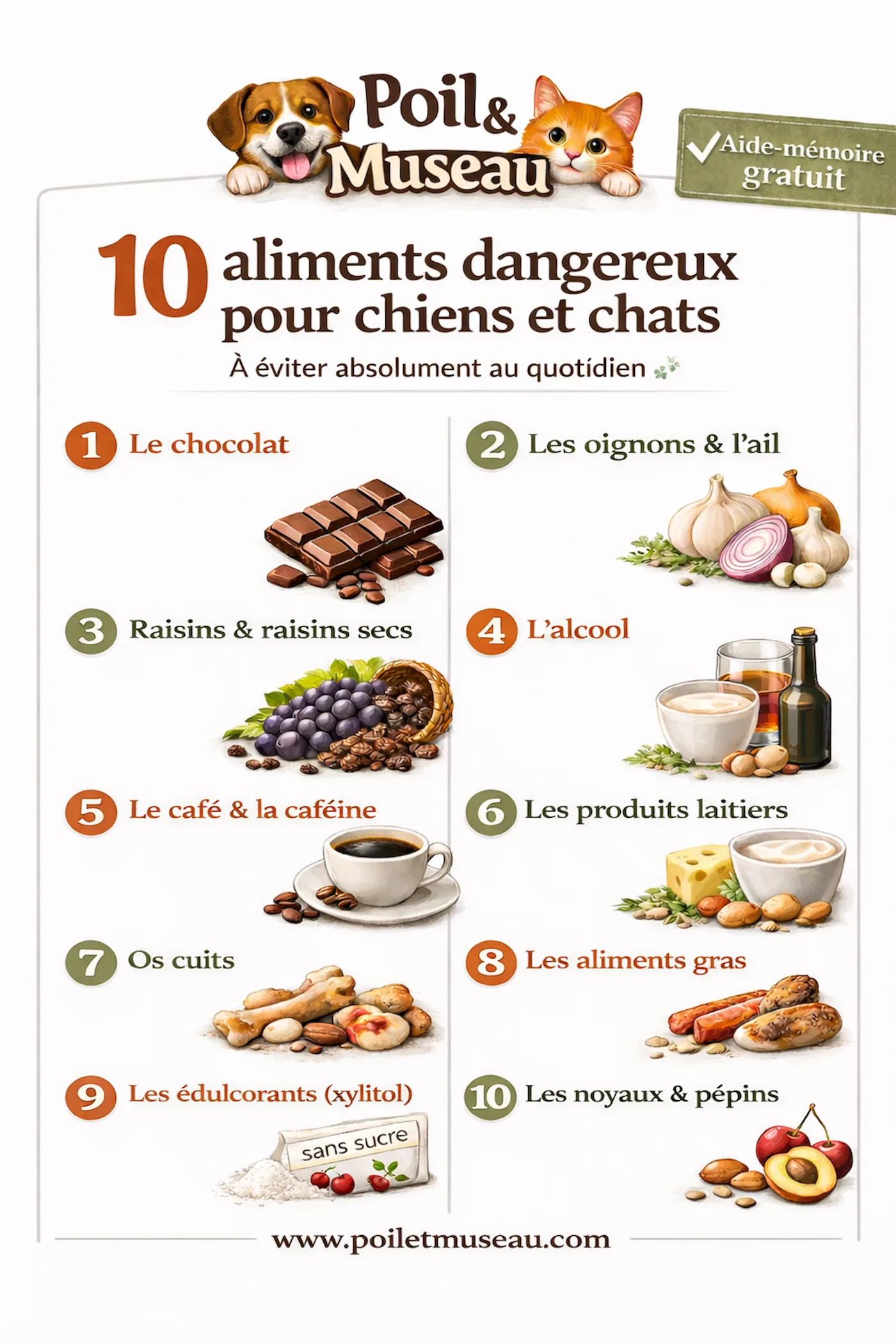
📥 Download the cheat sheet as a PDF
Alcohol
Even in very small amounts, alcohol can quickly affect the nervous system and vital functions.
Animals are much more sensitive to it than humans.
Possible signs:
- disorientation
- loss of balance
- slowed breathing
Coffee and caffeine
Caffeine acts as a powerful stimulant in animals.
Even a small dose can trigger an excessive reaction of the nervous system.
Possible signs:
- restlessness
- tremors
- a faster heart rate
Dairy products
Many dogs and cats digest lactose poorly, because they produce few enzymes to break it down.
It's not a serious danger, but it can cause discomfort.
Possible signs:
- diarrhea
- bloating
- gas
Cooked bones
Unlike raw bones, cooked bones become brittle and can splinter easily.
These fragments can injure the mouth, throat or intestines.
Possible risks:
- choking
- perforation
- blockage
Fatty foods
A diet that's too rich can overload the digestive system.
In some cases, it can lead to pancreatitis, an inflammation of the pancreas that requires veterinary care.
Possible signs:
- vomiting
- abdominal pain
- loss of appetite
Sweeteners (xylitol)
⚠️ Xylitol, found in many sugar-free products, is extremely toxic to dogs.
It causes a rapid drop in blood sugar and can affect the liver.
Possible signs:
- weakness
- loss of coordination
- seizures
Pits and seeds
Some pits (like cherry or peach pits) contain substances that can release cyanide.
In addition to the toxic risk, they can also cause a blockage or choking.
Homemade food: watch out for common mistakes
💡 Making your pet's meals yourself may seem like a good idea. In some cases, it can be.
However, without clear guidelines, it's easy to create an imbalance or include unsuitable ingredients.
A homemade diet must be well supervised to meet the animal's real needs and avoid deficiencies or long-term risks.
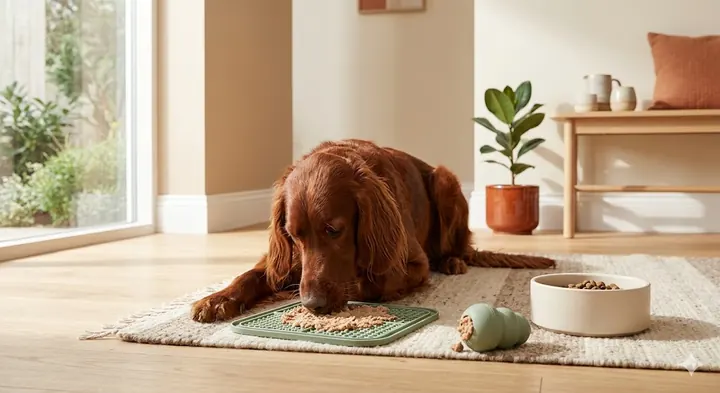
There are simple ways to keep them busy safely, including enrichment toys that limit boredom- or curiosity-driven behaviours. It's a popular option to keep a pet busy while limiting risky behaviours.
You can also limit some risky behaviours by offering suitable activities, like a lick mat, which helps keep them busy and calm every day.
What to do if your pet eats one of these foods?
⚠️ If your pet eats a potentially dangerous food, act quickly:
- Remove the food
- Watch its behaviour
- Contact a veterinarian if in doubt
It's better to consult quickly than to wait for symptoms to appear.
Good everyday habits
- Avoid giving table scraps
- Check the ingredients before sharing food
- Keep dangerous products out of reach
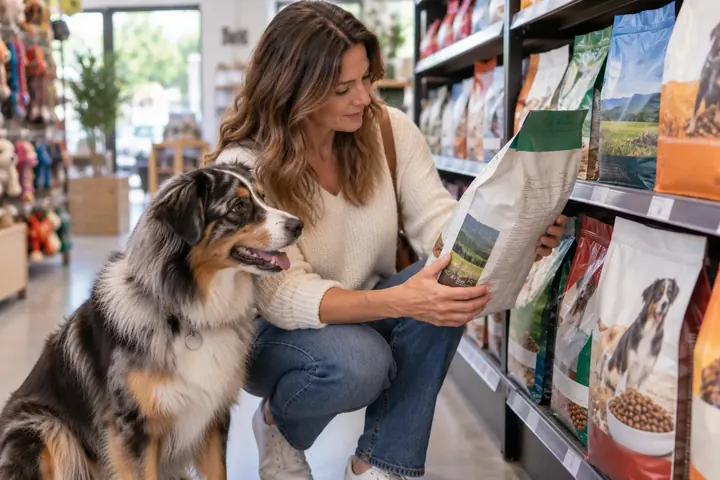
- Choose a suitable diet
The key takeaways
Taking care of your dog or cat also means paying attention to what it eats.
Some foods may seem harmless but carry very real risks for their health.
By knowing which foods to avoid and adopting a few simple habits, you greatly reduce the dangers and contribute to their well-being.
💡 When in doubt, it's always better to hold off… and choose a diet suited to their needs.
Read next
- Dog or cat poisoned: what to do right away?
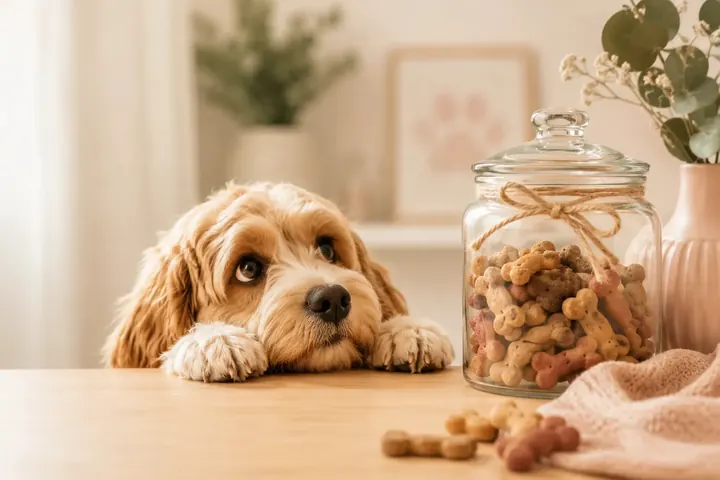
- Why do dogs love treats so much?
- The most common cat behaviours and how to respond effectively
Good everyday habits not only help prevent risks, they can also make some moments calmer with a lick mat.
According to veterinary recommendations from Vet et Nous and advice from Protégez-Vous, several common foods can pose a serious risk to dogs and cats.