Why does your cat knead? Understanding this behaviour
Where this behaviour comes from, what it can mean and when to look more closely.
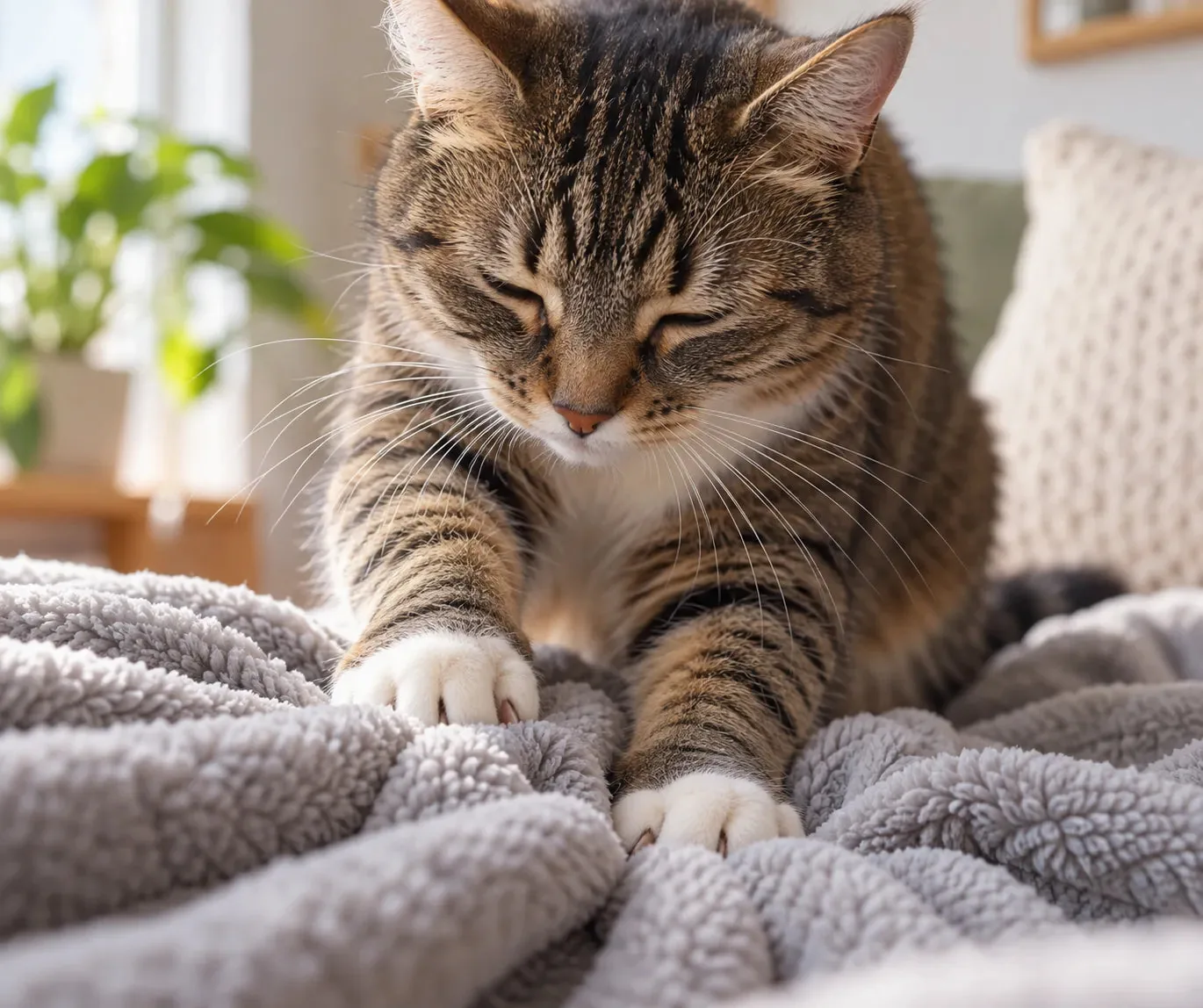
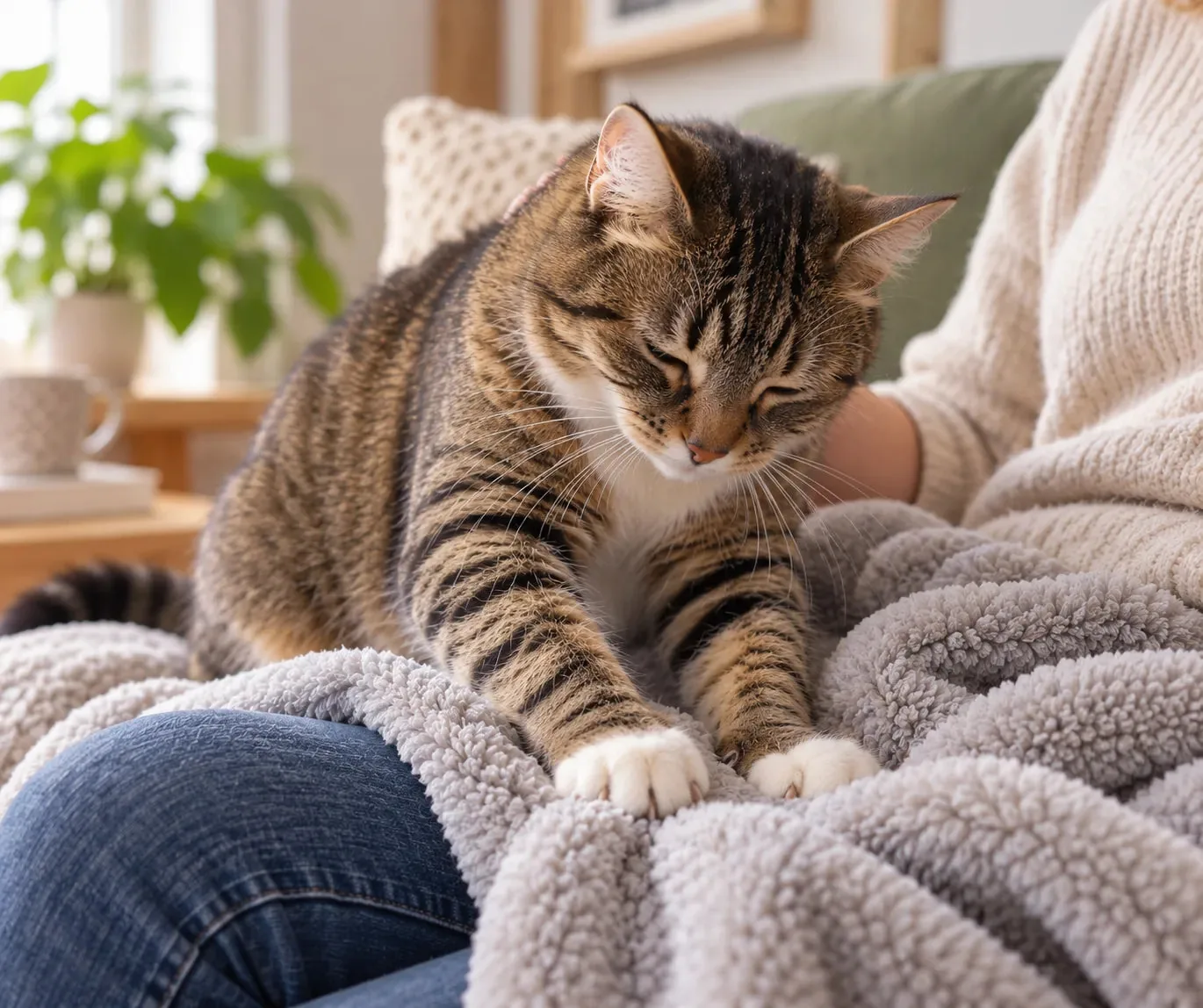
Your cat settles on your lap or on a blanket. A few seconds later, it starts pressing its paws down one after the other, sometimes purring and slightly extending its claws.
In Québec, people often say a cat is “making biscuits” — in French, faire des pattes. This very particular movement is also called kneading.
But why does your cat keep doing it as an adult? Is it simply because it feels good, or can this behaviour have other meanings?
To understand it better, you need to consider where it comes from and the context in which it appears.
What does kneading mean in cats?
Kneading is a rhythmic movement in which the cat alternately presses its front paws on a surface and lifts them again. It can do this on a blanket, a cushion or directly on you.
The claws may stay retracted or come out slightly with each movement. The cat may also purr or make small sucking motions.
Why do cats knead?
A behaviour that starts while nursing
While nursing, kittens alternately press their paws against their mother's belly. This movement stimulates the mammary glands and helps the milk flow.
💡 Good to know
The fact that kneading starts during nursing doesn't mean your cat is thinking of its mother every time it kneads, or that it mistakes you for her. The reasons this behaviour continues into adulthood are not fully understood.
When it's relaxed
As an adult, your cat may knead while resting, for example on a blanket, in its bed or near you. A relaxed body, half-closed eyes and purring are other clues to look for.
In this situation, kneading may be associated with a pleasant moment.
To leave its scent
Your cat's paws have scent glands. When it kneads a blanket, a cushion or even your lap, it may leave some of its scent behind.
To prepare a place to lie down?
Another hypothesis links this movement to preparing a resting spot. The cat's wild ancestors may have trampled vegetation to create a more comfortable surface before settling down.
This could explain why a cat sometimes kneads a blanket or cushion just before lying down. This explanation has not been proven, however.
Why does your cat knead on you?
Your cat settles on your lap or belly and immediately starts kneading? The warmth of your body and this soft surface can give it a pleasant place to settle. The fact that it chooses to stay so close to you may also reflect the trust it places in you.
So can we say it kneads you to show its affection? It's tempting to see it as a way of saying “I love you”, but we can't attribute such a precise meaning to kneading on you.
Why does your cat knead a blanket?
Blankets, cushions and other soft surfaces easily attract a cat when it kneads. Their soft texture can be especially pleasant when it's getting ready to rest.
The cat may also suckle or gently nibble the blanket while kneading. Suckling and kneading are two things kittens do while nursing.
This habit can continue into adulthood. As long as it doesn't chew or swallow pieces of fabric and you don't notice any sudden change, there's no need to worry.
Why does your cat knead while purring?
Your cat may purr while kneading, especially when it's settled in to rest.
Purring doesn't always mean the cat is happy, though. A cat can also purr and knead to soothe itself when it's stressed or not feeling well. That's why it's better to look at its overall behaviour rather than interpret a single sign.
When should you worry?
There's no specific frequency at which a cat kneads “too much”. Your cat may knead every day or much less often.
If your cat has always kneaded a lot and you don't notice any other change, there's usually no reason to worry. What you should watch for is mainly a sudden change in its habits.
For example, if it starts kneading much more than before and this change comes with a drop in appetite, unusual withdrawal or signs of discomfort, it's best to talk to your veterinarian.
What to do when it uses its claws?
When your cat kneads on your legs, its claws can make the experience a little less pleasant!
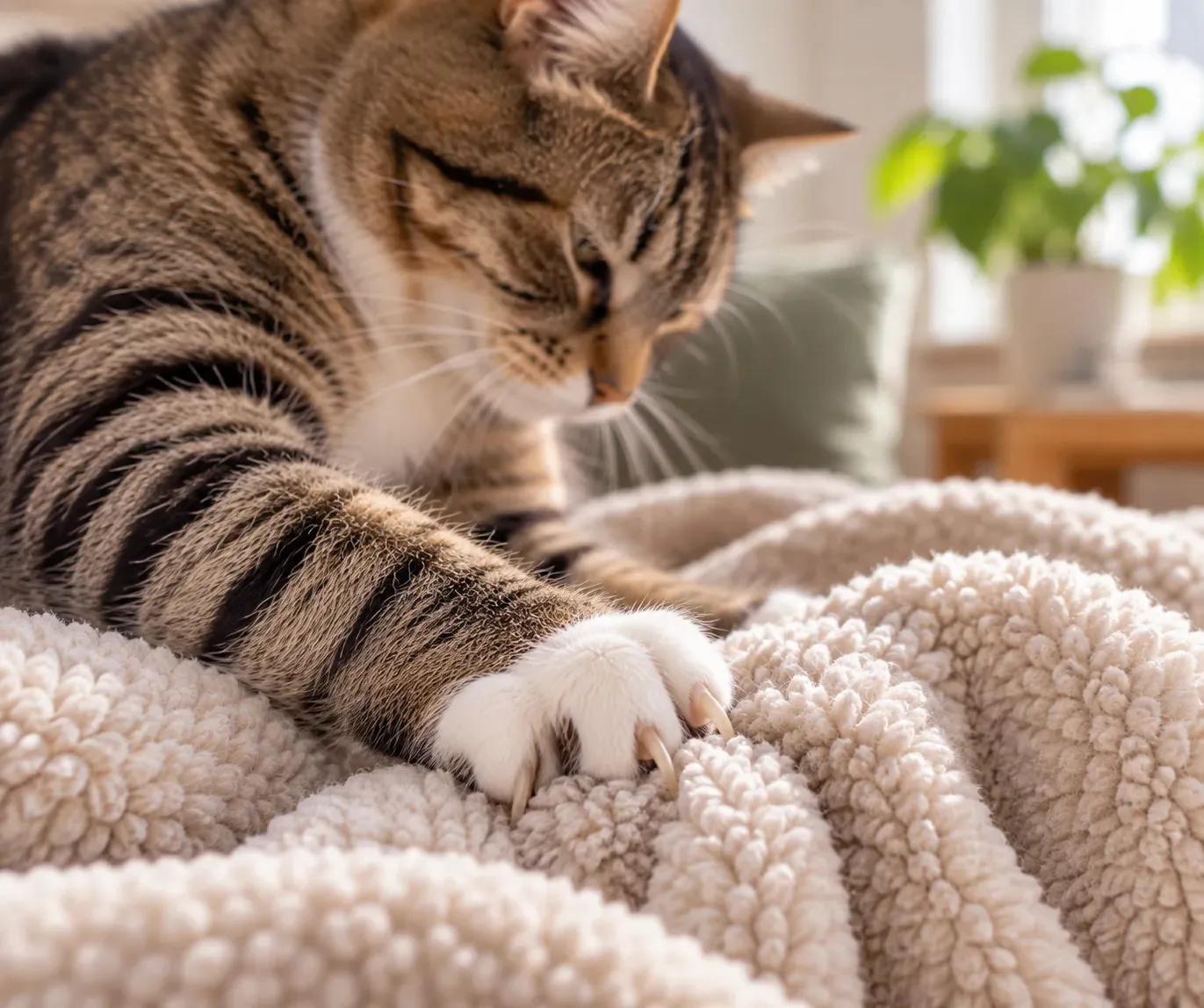
There's no need to stop your cat from kneading. A few precautions can limit small scratches:
- place a thick enough blanket between its paws and your legs;
- trim its claws regularly so they're less sharp;
- if it hurts you, gently move it to a blanket, a cushion or a spot where it likes to settle;
- avoid pushing it away abruptly or punishing it for this natural behaviour.
What if your cat doesn't knead?
Not all cats keep kneading as adults. If yours doesn't, it doesn't mean it's less attached to you or feels less comfortable in its environment.
A cat that doesn't knead may still come sleep near you, rub against your legs, blink slowly at you or seek your company.
Understanding this little ritual
The next time your cat starts kneading on your lap or its favourite blanket, notice what goes along with it. Its posture, its purring and the situation in which it kneads can help you understand what it's feeling at that moment.
Read next
Sources
This article draws in particular on information from VCA Animal Hospitals, Cats Protection, Blue Cross and PetMD on the origin of kneading, the possible reasons it continues into adulthood and the situations in which this behaviour can be observed.