What your cat's stare means depending on the situation
Trust, curiosity, anticipation: the clues to decode its gaze.
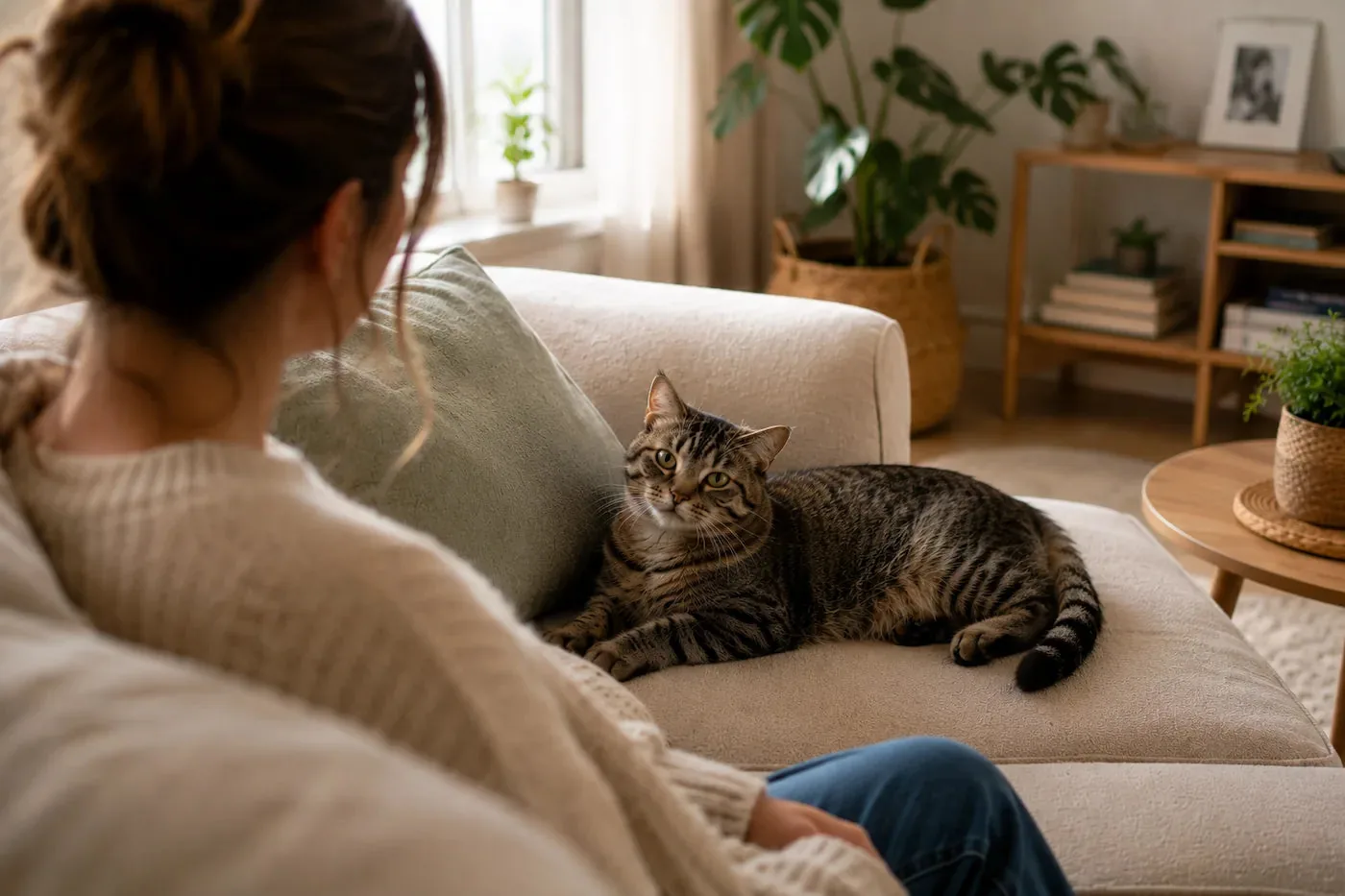
You're settled on the couch.
Your cat is lying a little farther away.
Then you notice it's looking at you.
For several minutes.
If you live with a cat, this scene probably feels familiar.
Is it looking for your attention?
Is it waiting for something?
Or is it simply watching what's going on around it?
The same gaze can have several meanings depending on posture, ears, pupils or what's happening at the moment.
To understand what it's expressing, you need to look at much more than its eyes.
Why context helps you understand its gaze
The gaze gives clues, but it doesn't tell the whole story.
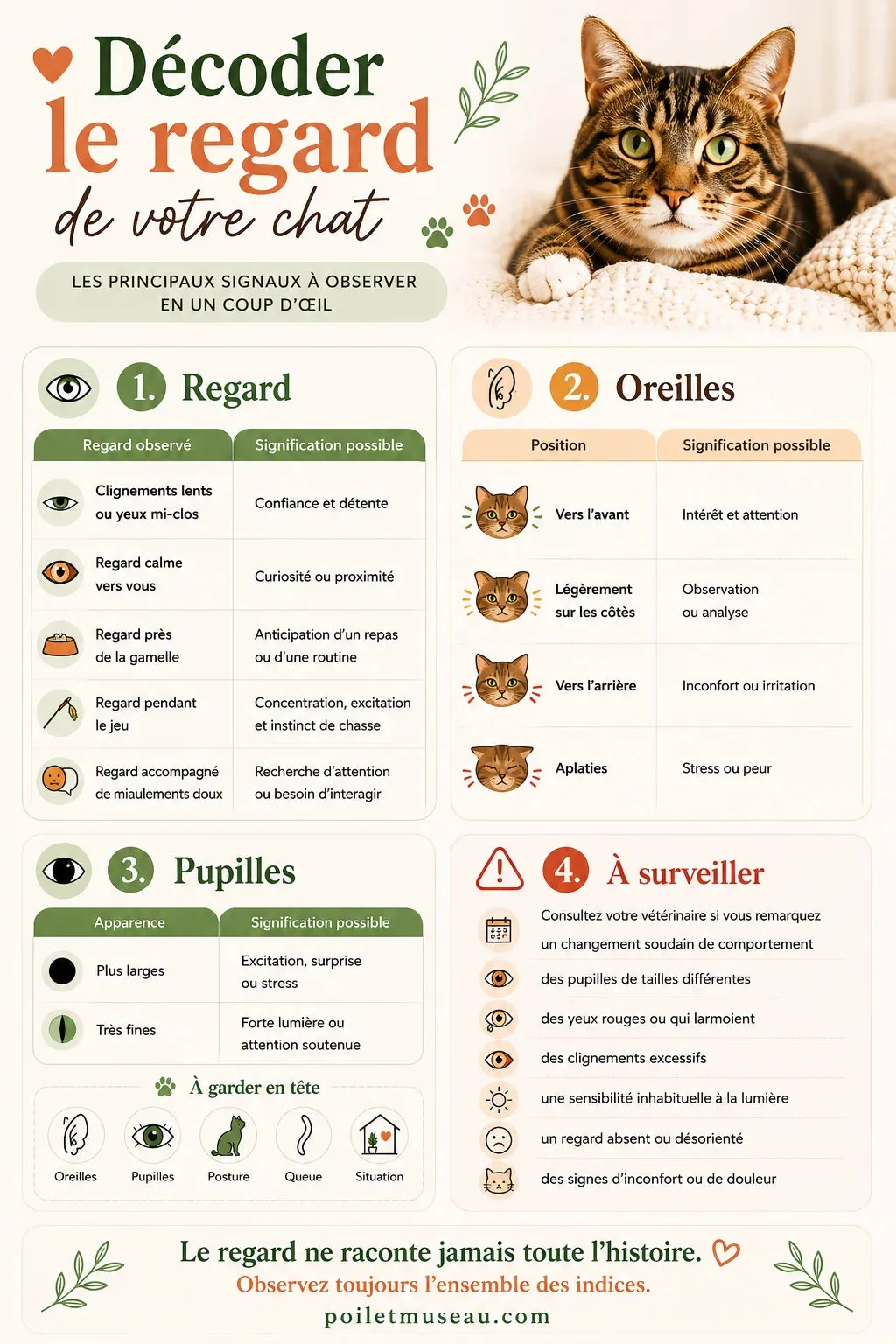
To understand your cat better, also look at:
🐾 the position of its ears
🐾 the size of its pupils
🐾 its posture
🐾 the movements of its tail
🐾 the situation in which the behaviour appears
Taken together, these clues give a much clearer picture of what your cat is feeling.
When your cat looks at you and blinks slowly
A cat that slowly closes its eyes in your presence may be expressing a feeling of trust and safety.
This small gesture is often seen when it feels at ease in its environment.
Combined with a relaxed posture and relaxed ears, this blink may reflect a moment of calm.
When your cat watches you near its food bowl
A gaze directed at you near the food bowl doesn't always mean hunger.
Your cat may also be:
- waiting for its meal;
- anticipating a familiar routine;
- trying to get your attention;
- checking what's going on around it.
Cats love routines and quickly pick up on the moments associated with meals.
When your cat looks at you during play
During play, the gaze becomes more intense.
Your cat analyzes movements before pouncing or chasing an object. Look in particular for:
- larger pupils;
- ears pointing forward;
- a lower posture;
- a moving tail.
Interactive toys, wand toys and treat-dispensing balls are great ways to extend these play sessions.
When your cat wants your attention
Your cat can also use its gaze to make contact.
It may come closer, watch you or settle right next to you.
A cat looking for your attention may:
- meow softly;
- rub against your legs;
- settle between you and what you're doing;
- seek a play session or petting.
A few minutes of play or an enrichment activity may be enough to satisfy its desire to interact.
What your cat's pupils can reveal
Light naturally affects pupil size.
However, excitement, surprise or anticipation can also make them look bigger.
Conversely, they can become very narrow when the light is strong or when your cat is especially attentive to its surroundings.
When the ears change the meaning of the gaze
Two cats can have the same gaze and convey completely different messages.
The position of the ears helps you better understand what your cat is trying to express.
Ears pointing forward are often seen in a cat that's attentive to its surroundings. When they're slightly to the sides, they may indicate that it's observing or analyzing a situation.
On the other hand, ears turned back or flattened can be associated with discomfort, irritation, stress or fear.
Paying attention to the ears along with the eyes lets you interpret more accurately what your cat is trying to communicate.
How to read its gaze together with its body language
The eyes only give part of the answer.
To better understand what your cat is trying to express, get into the habit of paying attention to its overall body language and the situation in which the behaviour appears.
Taken together, these clues say far more than a gaze on its own.
🧡 Free cheat sheet (in French)
When a change in gaze warrants a vet visit
See your veterinarian if you notice:
- a significant change in its behaviour;
- pupils of different sizes;
- red or watery eyes;
- excessive blinking;
- unusual sensitivity to light;
- a vacant or disoriented gaze;
- signs of discomfort or pain.
Key takeaways
Your cat's gaze can express trust, curiosity, anticipation or a desire to interact.
But the eyes never tell the whole story.
To understand your cat better, also look at its ears, posture, tail and what's going on around it.
The next time your cat catches your eye, you may notice clues that went unnoticed until now.
Read next
Sources
The information in this article is based on resources published by the American Association of Feline Practitioners (AAFP), VCA Animal Hospitals and the ASPCA on cat behaviour, body language and well-being.