How to choose the right harness for your dog
Harness types, criteria to check and how to find the right fit.
You've found a harness you like, but is it really right for your dog?
At first glance, models look alike. Yet one harness can be comfortable, stay in place and follow your dog's movements. Another can slip, rub or get in the way of its movement.
How can you recognize a well-designed harness?
Before choosing a harness, look at its shape, clips, adjustment points, materials and stitching. These features affect comfort, stability and durability.
The shape
A harness should follow your dog's movements without restricting its shoulders or rubbing under the armpits. Research shows that a harness's design and fit can affect a dog's movement. It's better to choose a model that respects its build rather than relying on looks alone.
A well-designed model should:
- leave the shoulders free;
- follow the shape of the chest without compressing the neck;
- leave enough room under the armpits;
- stay stable once adjusted.
The clips
Some models have a single leash ring on the back, while others have one on the front, or both.
A ring on the back works well for most walks. A ring on the front can offer better control for dogs that pull on the leash, while a model with two rings gives more options depending on your needs. A front clip doesn't replace leash training, though; it can make some situations easier to manage.
The clips should:
- be made of sturdy metal;
- be securely attached to the harness;
- be easy to reach when you clip on the leash;
- match the intended use.
The adjustment points
Even the best model won't be comfortable if it's poorly adjusted. Adjustment points let you get a good hold based on your dog's build.
Once on, the harness should:
- offer adjustment at the chest;
- stay centred once the straps are set;
- not squeeze behind the front legs;
- not leave enough room for your dog to slip a leg out or back out of it.
The materials
The material affects your dog's comfort, especially if the harness is worn on a long walk or in hot weather. Soft fabric fits the body better, while an overly stiff model can create pressure points or rubbing.
If your dog loves to swim, a quick-drying material will be more practical. If you go on long walks or hikes, an abrasion-resistant fabric will better withstand branches, rocks and rubbing.
Depending on your habits, choose a model that:
- is made of a soft material;
- strikes a good balance between lightness and strength;
- dries quickly if it gets wet;
- is easy to clean;
- has padding where the straps touch the body.
The stitching
Stitching often goes unnoticed, yet it says a lot about a harness's quality. Strong stitching better withstands repeated pulling, while neat finishing reduces the risk of rubbing against the skin or coat.
Also look at the strap edges. Thick, stiff or poorly finished seams can become uncomfortable, especially if your dog wears its harness on a long walk or hike.
The stitching should:
- be straight and even;
- have no loose threads;
- be well reinforced at stress points;
- feel smooth to the touch.
The main types of dog harnesses
No harness suits every dog. The right choice depends on its build, its leash behaviour and how you plan to use it.
This table compares the main types of harnesses to help you decide which best meets your needs.
| Harness type | Recommended for… | Good to know |
|---|---|---|
| Y-shaped | Most dogs Everyday walks Hiking |
On many models, the design leaves the shoulders freer. A good fit remains essential. |
| H-shaped | Dogs needing several adjustment options Dogs with unusual proportions |
Models vary from brand to brand. The straps should stay in place once adjusted. |
| Front-clip | Dogs that pull on the leash | The front clip can offer better control, but doesn't replace leash training. |
| Dual-clip | Leash training Varied walks |
The two attachment points let you adapt the harness to the situation. |
| With handle | Senior dogs Hiking Occasional support |
The handle can make some handling easier, but it shouldn't be used to lift the dog unless the manufacturer says so. |
You'll also find harnesses designed for specific activities, such as canicross, biking or car travel. They meet particular needs and aren't always the best choice for everyday walks.
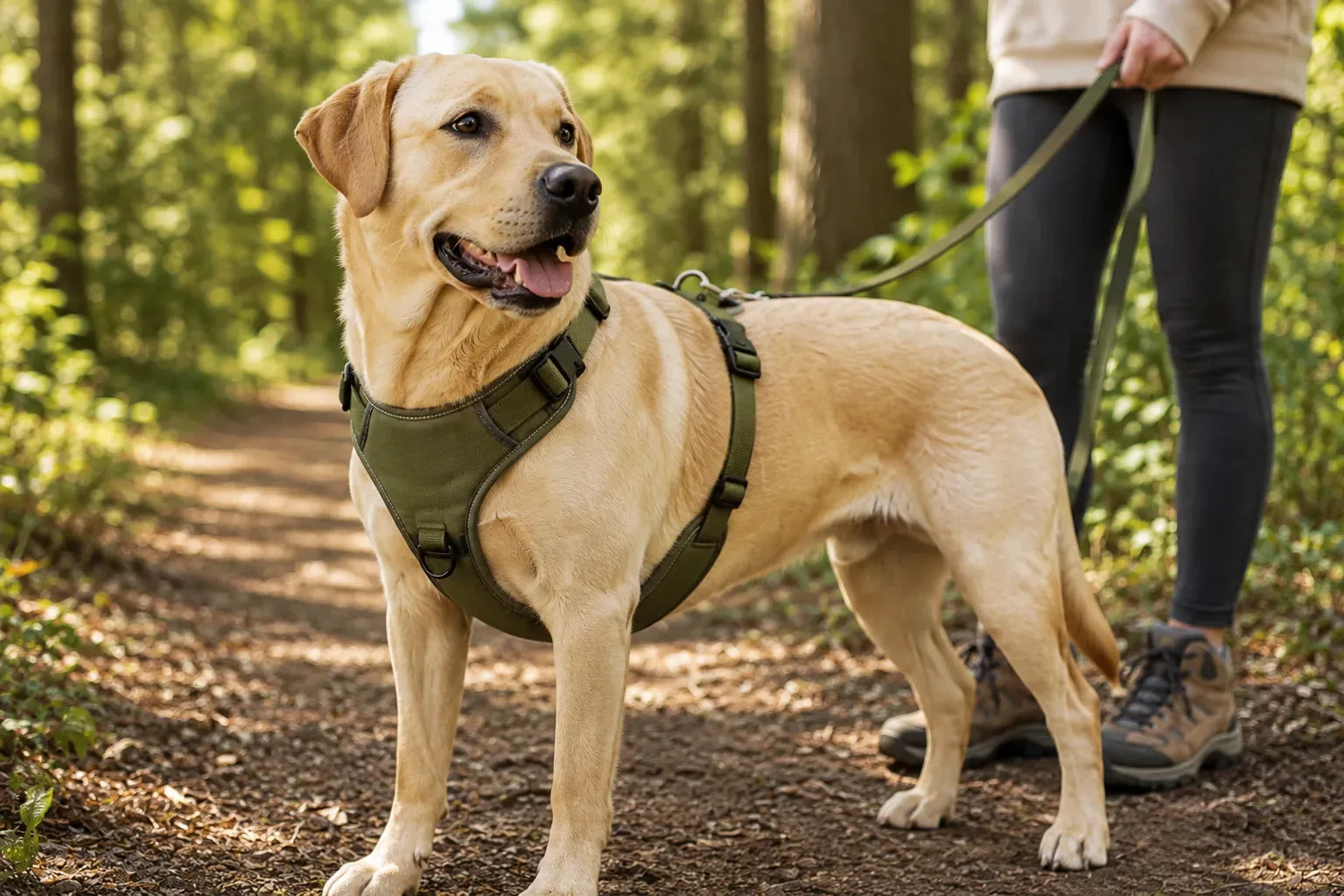
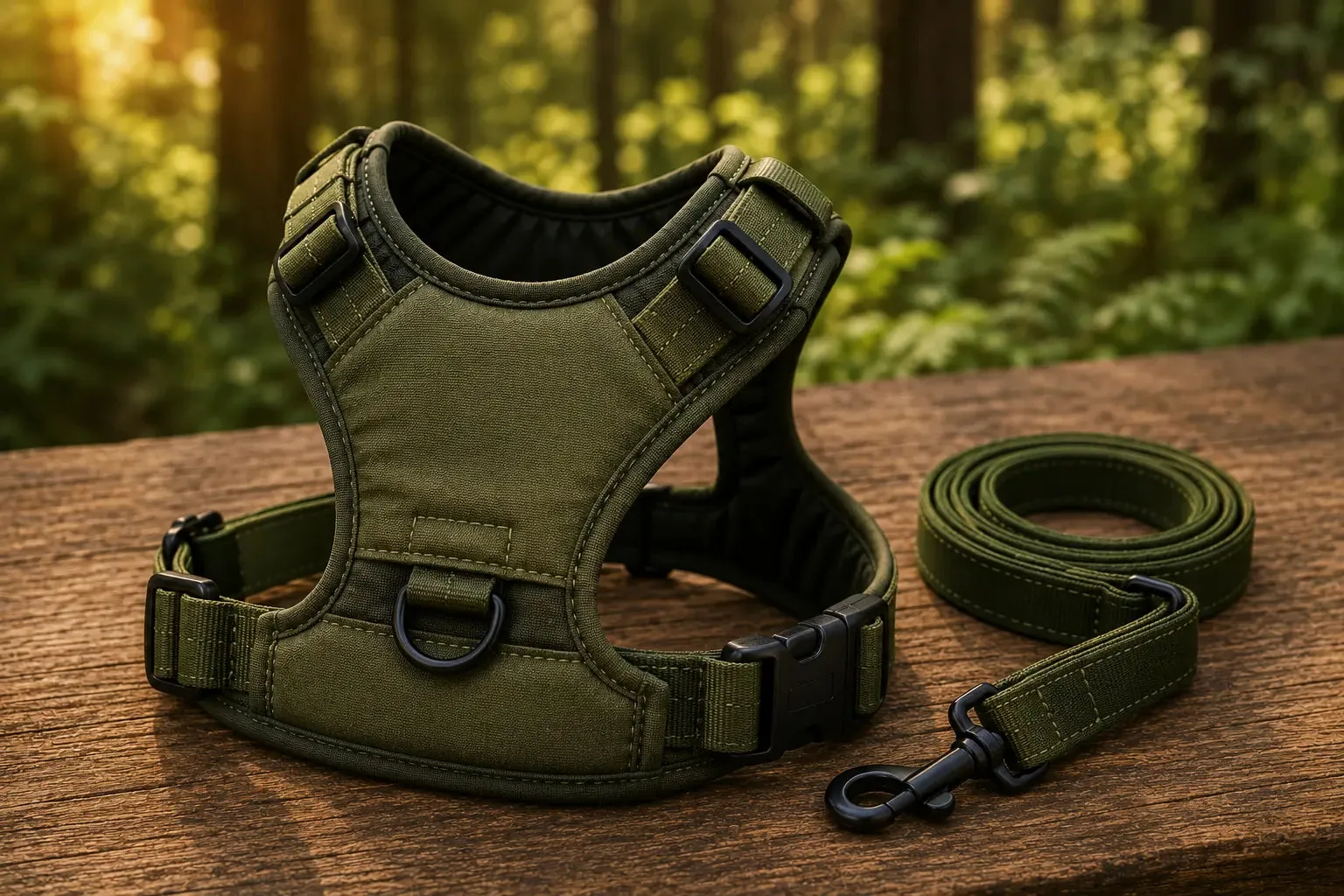
🐾 Example of a Y-shaped harness
Wondering what a harness that meets several of the criteria in this guide looks like? This model offers a Y shape, several adjustment points, two attachment points and comfortable padding.
How can you tell if a harness fits properly?
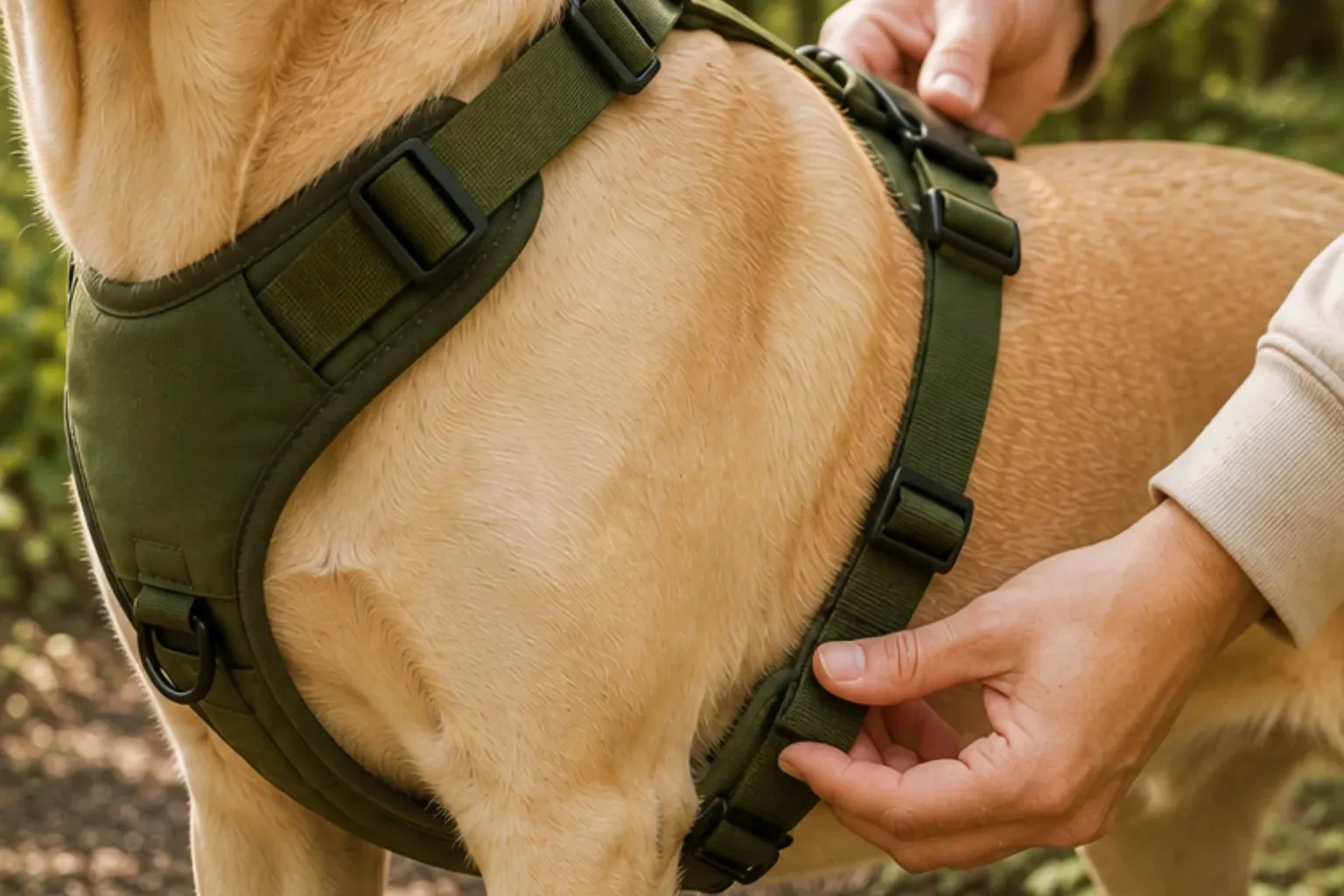
A good harness can become uncomfortable if it's poorly adjusted. Too tight, it can restrict movement or create pressure points. Too loose, it may twist to the side or let your dog slip out.
Once the harness is on, make sure that:
- two fingers fit under the straps easily;
- it stays centred when your dog walks;
- the straps don't rub under the armpits;
- the shoulders move freely;
- your dog walks naturally, without trying to take off its harness.
If your companion seems hesitant to walk, scratches often or tries to remove its harness, check the fit.
Frequently asked questions
At what age can a puppy wear a harness?
A puppy can start wearing a harness from its first outings. Choose a light, easily adjustable model, then get it used to it gradually by having it wear the harness for a few minutes at a time, with rewards. The harness shouldn't be worn all the time, though.
Harness or collar: which should you choose for walks?
A collar remains handy for carrying an ID tag. For walks, many dogs are more comfortable in a well-fitted harness, since it distributes pressure on the body better. The choice still depends on the dog's build, behaviour and planned activity.
Can you leave a harness on all day?
Take the harness off once the walk is over, unless your veterinarian or a professional advises otherwise. Wearing it constantly can cause rubbing, tangle the coat in some dogs or become uncomfortable during rest periods.
How do you measure your dog before buying a harness?
Grab a soft measuring tape and measure around the chest at its widest point. Depending on the model, the manufacturer may also ask for the neck measurement or other measurements. Always check the brand's own size guide before ordering.
Why does my dog refuse to walk in its harness?
A poorly fitted harness may be the cause, but it's not the only explanation. Some dogs simply need time to adjust, especially if they're wearing a harness for the first time. Give it time to get used to it and make sure no strap is causing discomfort.
When should you replace a harness?
Replace it if the straps are worn, the stitching starts to give, the clips are damaged or your dog has grown or changed shape. A harness that no longer fits well won't do its job properly.
How do you clean a harness?
Always check the manufacturer's recommendations. Most harnesses can be hand-washed with mild soap and air-dried. Regular cleaning helps remove dirt, odours and residue that could irritate your dog's skin. Avoid high-heat drying, which can damage some materials and plastic parts.
Conclusion
The right harness is first and foremost the one that suits your dog's build, stays in place and gives it good freedom of movement.
Before choosing, compare the shape, adjustments and materials, then make sure the model you pick can be fitted properly.
Your dog should be able to walk naturally and comfortably, on a short walk as well as a longer outing.
🐾 Read next
- How to choose the right bed for your dog
- Dog paws in summer: how to prevent burns and discomfort
- Heatwaves and dogs: how to help your dog stay cool
Sources
The information in this article is based on a scientific study and on recommendations published by recognized animal health organizations and professionals, including VCA Animal Hospitals, the American Kennel Club (AKC) and PubMed.